by Fronetics | Apr 5, 2016 | Blog, Content Marketing, Marketing, Strategy
The benefits of content marketing take more than a few months to come about.
Kate Lee, Senior Director of Strategy, recently wrote about a client who was disappointed in a newly adopted content marketing program and ready to quit — certainly they should be seeing more leads and more sales by now, right?! Since the company was just a few months in, the answer was no; that’s not how it works.
Content marketing is a long-term solution that helps businesses build brand awareness, grow their audience, and generate new leads and sales. But, like any good relationship, it takes time and effort to achieve results. You shouldn’t give up before the seeds you sow have time to bear fruit.
Just how long will it take for your content marketing strategy to yield results? Well, that really depends on your business and your goals, but you can count on at least six months. (Joe Pulizzi, founder of the Content Marketing Institute, says more like 18.) The point is, content marketing is not a magic, overnight solution. The reason reflects why content marketing is effective in the first place.
Let’s take a look:
Developing your strategy takes time.
Only 11% of companies without a documented content marketing strategy find their efforts to be successful, compared to 60% of companies with a strategy in place. (That number rises to 86% when the company designates someone to lead the strategy.) The significant increase in effectiveness can be attributed to the careful thought and research that goes into building a strategy.
You will need several months to build the foundation of your content marketing plan if it is to be effective. You need time to research the kind of content that resonates most with your audience and to truly understand the (very specific) demographic that finds value in what your company offers. Then you need time to determine and test which distribution channels will most effectively reach your target audience, to discern a plan for content production, and to build out an editorial calendar reflective of your strategy.
Without getting all of these pieces precisely right, you’ll waste an enormous amount of energy and resources working on an ineffective strategy. Take the time to evaluate the market for your business and its content marketing strategy, and you’ll realize results in time.
Becoming an authority takes time.
The goal of your content marketing efforts should be to be a consistent source of information and value to your audience, who gradually will come to trust your authority and reward you with their business when they are ready to make a purchase. And establishing yourself as an expert doesn’t happen overnight.
Consistency is key for two reasons. For one, the average B2B buyer consumes between two to five pieces of content before making a purchase decision. If your content is old, arbitrary, contradictory, or otherwise unreliable, buyers will chose a different vendor whose content is more trustworthy. Consistent and consistently good content keeps your target audience engaged and builds your credibility with them.
Secondly, search engines rank websites based on several factors, and one of the most important is consistency. If your company blogs every other month, compared to companies that post several days a week, your posts will be penalized in search results. And since very few readers click beyond the top five search results, you’re drastically reducing your organic search potential.
As a SumAll article put it, “Whether getting traffic to your blog or your content ranked in the search engines, it doesn’t happen overnight, but instead by repeatedly creating and distributing quality content on a frequent basis for the long-term.”
Building your audience takes time.
The B2B buying process is becoming longer and more complex because the majority of buyers (82%) are using more sources to research and evaluate products and services, and they are spending more time in the research phase itself. In fact, 71% of B2B researchers start with a generic search — rather than searching for a particular company — and do an average of 12 searches before even engaging with a specific brand’s site. They are 57% of the way down the sales path by this point, meaning they have already spent a fair amount of time educating themselves with the enormous amount of information available to them on the Internet.
This means you need to allow your target audience time to find you and complete thorough research about you and your competitors before you even realize that the lead exists. And likely there will be more time before a sale takes place.
Content marketing is much more about lead nurturing than producing instant results. As you build your reputation as a valuable source of information, you will simultaneously build a loyal following of readers and content consumers who continue to return to you for knowledge and, ultimately, purchases. Relationship-building is not a streamlined process, but it does foster the ever-valuable repeat business that will have a greater impact on your bottom line than a one-and-done sale.
Your sales cycle takes time.
Unfortunately, content marketing cannot decrease the length of your sales cycle. Thus, you can’t expect to see the fruits of your labors (in terms of dollars) until at least one cycle is complete.
There should be, however, hints along the way that your efforts are working. Metrics like increased website traffic, email registrations, and social reach offer clues that more potential customers are finding your business in their research. You should take these signs and continually evolve your strategy to accommodate what is working for your business.
Also keep in mind that while content marketing can have an enormous impact on generating and nurturing leads, it does not deliver sales on a silver platter. Sales teams still play a major role in building on those relationships and closing deals.
Give your relationship with content marketing time to play out, and don’t be afraid to adjust your strategy along the way if you find some things are working better than others.
Related posts:

by Jennifer Hart Yim | Mar 23, 2016 | Blog, Content Marketing, Marketing
Editor’s note: This is a guest post by Jennifer Cortez, Director, Marketing Communications, Transplace. Transplace is a North American non-asset-based provider offering manufacturers, retailers, chemical and consumer packaged goods companies the optimal blend of logistics technology and transportation management services.
Content has become a critical component of the modern marketing mix, but companies have to walk a fine line when it comes to the information that is being pushed out to the market. Too little and your audience will become bored and uninterested, and unfortunately, may look elsewhere for information (i.e., your competition). Too much and your audience may not know where to start (especially if it’s poorly organized). And if churning out too much content leads to a decline in quality, your audience may be left with dull, unremarkable content that, most importantly, is lacking in value to the industry.
When we’re creating content here at Transplace, (and I encourage others to keep this in mind) we ask ourselves this question: “Why should my customer care?” If you can’t answer that question, then it’s time to rethink your strategy. If you’re creating content just for the sake of it or because it’s something you know you need to do, you are most likely headed down the wrong path.
If you’re new to content marketing, first figure out what you want your content to solve before getting started. Do you want to increase brand awareness or drive more traffic to your website? Or maybe you’re focused on converting more leads into customers? Whatever it might be, each of your marketing goals will influence your content marketing strategy and therefore help you understand the audience you’re writing for, what channels you’ll share the content on, and how you’ll communicate key messages.
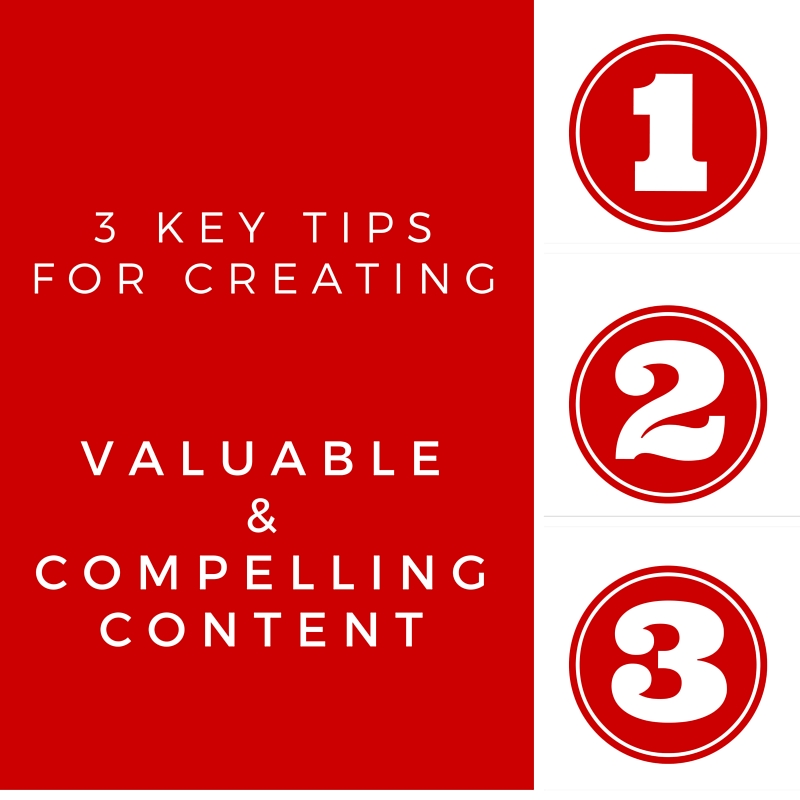
3 Key Content Considerations
Content is an extremely important part of our marketing and communications strategy and helps us continue to grow our brand awareness and thought leadership in the logistics and transportation industry. Our main objectives focus on three things: creating quality content that is relevant and helpful to the people in our industry, easy to understand and comes in a variety of formats. Let’s dig into these three areas a little further.
1. Producing helpful content
It’s easy to produce self-serving content such as sales pitches or a 1-pager on ‘Why you should pick our company,’ but let’s face it – tooting your own horn isn’t going to do much in terms of moving the needle closer to any of those marketing goals we mentioned previously. And most likely, these types of content pieces aren’t going to be searched for or probably even read by your target audience. One of two things occurs with standard sales slicks these days – they get deleted or physically thrown in the trash.
What is going to be helpful is producing content that becomes a useful resource for people in their day-to-day job. We want to keep them updated on trends, but it’s also important for us to keep in mind what we should be talking about that others aren’t. What are we foreseeing based on our unique position in the market that we can relay through content so our network is more prepared? If we can do a better job of talking to the buyer and figuring out what they want to hear about, then our content is only going to prove that much more valuable.
2. Content readability is key
Sometimes the topics in our industry can be complicated and it’s our job as the subject matter experts to make these complex topics understandable. It’s also important to not talk above your audience. You’ve probably heard of the Flesch readability score before, which indicates how difficult a reading passage is to understand. Content readability is powerful and your content marketing, website and SEO are dependent on it. Search engines like Bing and Google prefer readable content so when it comes to writing – keep it readable, compelling and easy to understand.
3. Content variety keeps things fresh
What I mean by this is have some fun with the types of content being created or reused for additional purposes. Did you conduct a survey and now have some great data points to share? Instead of housing this valuable information in a long article or whitepaper, you could highlight the research in an animated infographic. At Transplace, we’ve had great success at creating a variety of content pieces – from videos and podcasts to our TIP List and Q&As – we change up the types of content we’re creating to keep our audience coming back for more. You can also leverage existing content to create “new” types of thought leadership to push out. Nowadays there are several different ways people prefer to digest news and information, and we don’t have a crystal ball to show us these preferences, so you do typically need content in multiple forms in several different places whether that be print, online or social media. The permutations of content creation are endless if you tap into your creativity and keep things fresh!
Today, there is so much content out there that it’s become all too important for companies to truly create value in the information that they’re pushing out to the market. And when it comes to valuable content, keeping these three tips in mind will have you well on your way to creating content that is helpful to your audience and keeps them coming back for more!


by Fronetics | Mar 7, 2016 | Blog, Content Marketing, Marketing, Social Media
Your content stinks. Here’s why.
Twenty-seven million pieces of content are shared every day — and most of it is crap. To attract readers to your content, you must stand out, and I mean really stand out, among the masses. That’s no easy feat.
You may be spending an enormous amount of time and money as part of a content marketing effort, but, if no one is reading what you’re producing, you’re definitely not achieving your ROI. Consider the following points, and ask yourself if any could be negatively impacting your readership.
Here are the top 10 reasons no one is reading your content.
10. You don’t have a strategy.
Only 11% of companies without a documented content marketing strategy find their efforts to be successful, compared to 60% of companies with a strategy in place. And that number rises to 86% when the company designates someone to lead the strategy. Having a clear vision for your content and a plan for executing that vision is crucial to earning an audience.
9. Your content isn’t search-engine optimized.
Seventy-seven percent of today’s buyers use Google to research information about products. Search engine optimization (SEO) means writing copy for your digital assets so they will be prioritized by Google in web queries related to your business or products. Three of four people will click on the top five search results. So the further you move from those top five results, the less likely someone is to find, much less read, your content. If your content isn’t SEO-friendly, readers may not even have the chance to see what you’re writing because it is so far down in their search results.
8. You are using the wrong channels.
If a tree falls in the woods and nobody is around to hear it, did the tree fall after all? Stop publishing in the empty woods. Who is the target audience for your content, and where are they active? Evaluate your audience (or lack thereof) in each of the channels where you publish, and see if something is amiss. This will vary greatly by business. You can access personalized information on your followers’ social media habits through analytic programs like Google Analytics and sites like Tweriod.
Also to consider: on lightning-fast platforms like Twitter, a miscalculation of timing could be to blame. (See The Best Time to Post on Social Media.)
7. You’re not publishing often enough.
Inconsistent content is one of the primary reasons readers become disengaged with a particular publisher. Even publishing one more blog post a week can significantly boost your readership. Try a little experiment for a few months by playing with the number of times per week you publish — say, three times per week one month, four times the next, and five the next. You’ll find the sweet spot where you get the most engagement but can also handle the production schedule.
The next reasons have to do with the substance of the content itself.
6. You’re publishing a sales pitch instead of content.
Imagine you’re looking to buy a car. Researching different options online, Site A, run by Dealership A, offers expert opinions about various makes and models, while Site B talks about how Dealership B offers top-notch customer service and a no-nonsense negotiation policy. You’d probably never come across Site B in the first place because the content is irrelevant (and trite… and annoying), whereas Site A has exactly what you’re looking for.
Content marketing is your opportunity to provide valuable, expert information to people who are seeking it out. Associating your brand with that sort of expertise attracts customers — not to mention, helps them find you via organic search in the first place. No one wants to read your sales pitch over and over again, and they won’t.
5. You are not telling the truth.
I am talking about two different definitions of truth here.
For one, are you being honest? Today’s consumers can smell b.s. from a mile away, largely because the Internet forgets nothing and forgives nothing. The prevalence of user-review sites and platforms like social media means customers will always have an outlet to share their experiences, both good and bad. If your business does not provide what you promise, people will be upset and take to these forums to complain about it. Trust and transparency are two key assets in earning (and keeping) readership.
Secondly, are you being true to who you are as a business? A recent Harvard Business Review article defines successful marketers as mission-focused, not consumer-focused. Don’t produce content based on what you think your customers want to hear. The beauty of content marketing is that when you put your business mission out into the universe through content, people who are seeking that information find you. In other words, build it, and they will come.
4. You’re not offering anything of value.
DigitalTonto says, “The first step towards engagement is creating value beyond the basic transaction of payment for a product or service.” This is the essence of content marketing: a related offer of value in the form of expertise, entertainment, etc. For example, L’Oreal Paris provides free makeup tutorials on its YouTube channel, Destination Beauty, and, Apple offers free classes, product demonstrations, and tech support from the Genius Bar for product users.
The question to ask is, what is your value to your customers? Can you offer expert advice on a particular topic through a blog? Is there something about your products or your people that would make for entertaining or informative videos? Do you have access to top-of-their-field specialists that could lead a webinar series? Find whatever it is that is unique to your company, and leverage that in your content marketing to attract readers.
Because there is so much content out there, today’s consumers can afford to be partial to publishers who provide information in a way that is pleasing to them. They also have shorter attention spans than goldfish. That means things like format, length, accessibility, and voice can majorly impact whether people read your content or not. Also, be mindful that different platforms should offer different experiences based on reader expectations (e.g., Instagram isn’t the place for lots of text).
2. You’re not heeding performance analytics.
The one certain constant in marketing is that things will always change. What works for you one year will certainly be irrelevant the next. Content marketing won’t allow you to rest on your laurels, either. You should stay on top of your analytics to monitor what kind of content is successful in the present moment, and you should tweak how you’re doing things as people, technology, and events change. Keep testing new ideas to see how they are received, and get rid of old standbys that no longer pull their weight.
1. Your content is bad.
While this seems obvious, it’s worth repeating. If the quality of your content is bad, no one will read it, regardless of what value it offers. The same goes for if you find yourself saying, “it works,” or “it’s fine!” If there are 27 million options, who would choose “fine?”
Do an honest evaluation of your content, or have a neutral outside party do so for you. Is it original, substantial, and well-written? Make sure that your content is edited, and that it is free from grammatical errors, spelling mistakes, and awkward phrasing. And remember that you get what you pay for. Professional writers can be expensive, but there’s a reason for that — theirs is a specialized craft, and very few people can do it well. If you want people to read your content, you should make sure that it’s worth reading.
Related articles:

by Fronetics | Jan 20, 2016 | Blog, Content Marketing, Marketing, Strategy
Grow your business with this 12-step guide to creating a content marketing strategy.

So, you’ve decided to give content marketing a go, but you’re not sure where to start. Or, maybe you have tried implementing some of the basic principles but haven’t had much success with your piecemeal approach.
Either way, without a documented strategy in place, you’re much less likely to reap the potentially enormous benefits inbound marketing can offer.
In fact, only 11% of companies without a documented content marketing strategy find their efforts to be successful, compared to 60% of companies with a strategy in place. And that number rises to 86% when the company designates someone to lead the strategy. The numbers speak for themselves.
Fronetics Strategic Advisors has developed a 12-step guide to developing a content marketing strategy specifically tailored to your business. This eBook provides insight into what makes good content, as well as tried-and-true measures your company can take to get the most out of your marketing efforts. By following these recommendations, you’ll be well on your way to developing a strategy that drives profitable customer action and helps you meet your business goals.

Related articles:
When it comes to marketing we work with our clients to create and execute strategies that drive success and elevate their brand position within the industry. Unlike other firms, we align marketing programs with business objectives and, through a data driven approach, are able to deliver results with a targeted ROI. Our team is comprised of strategists, marketing professionals, writers, designers, and experts in social media. Together we leverage our experience to increase brand awareness, position our clients as thought leaders, drive meaningful engagement with prospects and customers, and help businesses grow. Learn more about what we do.

by Fronetics | Jan 18, 2016 | Blog, Content Marketing, Marketing, Strategy
Improve your content marketing strategy in 2016 by following these six tips.
We know that content marketing is a highly effective tool for companies of all shapes and sizes, be they B2C or B2B. (If you’re not using inbound marketing, here are five reasons why you should be.) But, considering this strategy takes considerable time, effort, and resources, are you getting the most out of your efforts?
Long gone are the days when a weekly blog and vague presence on social media will cut it — 2016 is calling for a diversified content marketing strategy that speaks to today’s sophisticated consumer base.
Here are 6 ways to improve your content marketing strategy in 2016:
1) Be mobile-friendly.
Google announced in May 2015 that the number of searches on mobile devices has now surpassed those conducted on desktops in the US. And we know that reality isn’t limited to personal Internet use. Evidence suggests B2B buyers are increasingly using mobile devices to do research, make inquiries, and purchase products. If your website isn’t mobile-friendly, your company is missing out the significant share of customers who demand mobile-optimized content. What’s more, Google now penalizes non-mobile sites in searches, meaning your website will fall further below the fold, as more companies cater to smartphone screens.
Here’s how to make your supply chain website mobile-friendly.
2) Diversify your content.
A blog for which you provide regular, original content is an excellent start . But, unfortunately in this day and age, it’s not enough. Offering content in different formats provides a richer experience for your leads, adds depth to your brand identity, and allows you to reach and connect with more consumers. There are a dizzying number of options out there, including podcasts, slideshares, videos, graphics, ebooks, and whitepapers, to name a few. Choose a couple that fit your brand best, and see where they take you. Which leads me to…
3) Do video.
Video is not just for funny cats and cover artists anymore — it’s the most popular form of content being consumed online. YouTube is the second largest search engine in the world, with more than one billion users conducting over 3 billion searches per month. What’s more, the number of videos uploaded to Facebook has increased by 94% over the last year, with more than 50% of Americans who use Facebook daily viewing at least one video per day. Some brands have capitalized on this trend. (See the Budweiser puppy commercial, viewed over 30 million times.) But there is a lot of potential there for businesses in all industries — a little creativity and some time and effort adding video to your content marketing suite could really pay off.
4) Tug at the heartstrings.
There’s a reason the Budweiser puppy video has enjoyed so much success: we love a feel-good story. An ad that evokes strong emotions makes us associate those feelings with the brand. Studies show that emotions play a leading role in B2B purchases, too, and your content marketing should leverage that idea by telling great stories and by promoting the value you offer. Content that tells a great story connects people to your brand on an emotional and intellectual level, helping earn their trust and loyalty. Similarly, by touting figures that illustrate the value your company offers its customers — like money saved, convenience, or top-of-the-line performance — you remind people what it is you can do for them. And there’s no better way to win hearts (and leads) than reminding them what they’ll get out of your relationship.
5) Focus on relationship marketing.
HubSpot identifies relationship marketing as the #1 game-changing marketing trend to tackle in 2016. While this term largely falls under the CRM umbrella, it can play an important role in your content marketing strategy as well. Providing existing customers with custom-tailored content and information shows that you understand their needs, and it makes communications infinitely more personal. You’re not just blasting out some mass communication that ignores the facts that you know about your client — for example, a mass email titled “Baby it’s cold outside!” to a client based in Florida. Modern technologies like geo-targeting and CRM software make personalizing content and communications much easier, but it will still take extra time and resources. That’s the (absolutely worth-it) cost of long-term, loyal customers earned through relationship marketing.
6) Seek professional help.
Even if you’re part of the 58% of companies that handles content in-house, a little help from the experts will only improve your results. Hiring an SEO-savvy copywriter, for instance, can impact your bottom line. Or working with a firm like Fronetics can help you develop and execute a content marketing strategy designed to grow brand awareness and to meet your specific business goals. Here are six other digital and content marketing tasks to outsource. A fresh perspective from outside your company may be just what your marketing efforts need to excel in 2016.
Related articles:
When it comes to marketing we work with our clients to create and execute strategies that drive success and elevate their brand position within the industry. Unlike other firms, we align marketing programs with business objectives and, through a data driven approach, are able to deliver results with a targeted ROI. Our team is comprised of strategists, marketing professionals, writers, designers, and experts in social media. Together we leverage our experience to increase brand awareness, position our clients as thought leaders, drive meaningful engagement with prospects and customers, and help businesses grow. Learn more about what we do.