by Jennifer Hart Yim | Mar 23, 2016 | Blog, Content Marketing, Marketing

Editor’s note: This is a guest post by Jennifer Cortez, Director, Marketing Communications, Transplace. Transplace is a North American non-asset-based provider offering manufacturers, retailers, chemical and consumer packaged goods companies the optimal blend of logistics technology and transportation management services.
Content has become a critical component of the modern marketing mix, but companies have to walk a fine line when it comes to the information that is being pushed out to the market. Too little and your audience will become bored and uninterested, and unfortunately, may look elsewhere for information (i.e., your competition). Too much and your audience may not know where to start (especially if it’s poorly organized). And if churning out too much content leads to a decline in quality, your audience may be left with dull, unremarkable content that, most importantly, is lacking in value to the industry.
When we’re creating content here at Transplace, (and I encourage others to keep this in mind) we ask ourselves this question: “Why should my customer care?” If you can’t answer that question, then it’s time to rethink your strategy. If you’re creating content just for the sake of it or because it’s something you know you need to do, you are most likely headed down the wrong path.
If you’re new to content marketing, first figure out what you want your content to solve before getting started. Do you want to increase brand awareness or drive more traffic to your website? Or maybe you’re focused on converting more leads into customers? Whatever it might be, each of your marketing goals will influence your content marketing strategy and therefore help you understand the audience you’re writing for, what channels you’ll share the content on, and how you’ll communicate key messages.
3 Key Content Considerations
Content is an extremely important part of our marketing and communications strategy and helps us continue to grow our brand awareness and thought leadership in the logistics and transportation industry. Our main objectives focus on three things: creating quality content that is relevant and helpful to the people in our industry, easy to understand and comes in a variety of formats. Let’s dig into these three areas a little further.
1. Producing helpful content
It’s easy to produce self-serving content such as sales pitches or a 1-pager on ‘Why you should pick our company,’ but let’s face it – tooting your own horn isn’t going to do much in terms of moving the needle closer to any of those marketing goals we mentioned previously. And most likely, these types of content pieces aren’t going to be searched for or probably even read by your target audience. One of two things occurs with standard sales slicks these days – they get deleted or physically thrown in the trash.
What is going to be helpful is producing content that becomes a useful resource for people in their day-to-day job. We want to keep them updated on trends, but it’s also important for us to keep in mind what we should be talking about that others aren’t. What are we foreseeing based on our unique position in the market that we can relay through content so our network is more prepared? If we can do a better job of talking to the buyer and figuring out what they want to hear about, then our content is only going to prove that much more valuable.
2. Content readability is key
Sometimes the topics in our industry can be complicated and it’s our job as the subject matter experts to make these complex topics understandable. It’s also important to not talk above your audience. You’ve probably heard of the Flesch readability score before, which indicates how difficult a reading passage is to understand. Content readability is powerful and your content marketing, website and SEO are dependent on it. Search engines like Bing and Google prefer readable content so when it comes to writing – keep it readable, compelling and easy to understand.
3. Content variety keeps things fresh
What I mean by this is have some fun with the types of content being created or reused for additional purposes. Did you conduct a survey and now have some great data points to share? Instead of housing this valuable information in a long article or whitepaper, you could highlight the research in an animated infographic. At Transplace, we’ve had great success at creating a variety of content pieces – from videos and podcasts to our TIP List and Q&As – we change up the types of content we’re creating to keep our audience coming back for more. You can also leverage existing content to create “new” types of thought leadership to push out. Nowadays there are several different ways people prefer to digest news and information, and we don’t have a crystal ball to show us these preferences, so you do typically need content in multiple forms in several different places whether that be print, online or social media. The permutations of content creation are endless if you tap into your creativity and keep things fresh!
Today, there is so much content out there that it’s become all too important for companies to truly create value in the information that they’re pushing out to the market. And when it comes to valuable content, keeping these three tips in mind will have you well on your way to creating content that is helpful to your audience and keeps them coming back for more!


by Fronetics | Mar 22, 2016 | Blog, Content Marketing, Leadership, Marketing
Meet five women who are changing the face of digital marketing at their big brands.
March is National Women’s History Month, and thus we’ve been talking a lot about female leadership, the gender gap, and related issues. Today I’d like to call attention to five outstanding women behind big brands who are taking the digital marketing world by storm.
Here they are, in no particular order:
 Yin Woon Rani
VP Integrated Marketing
The Campbell Soup Company
Camden, NJ
You may have seen the commercial where a mom, pushing two wild kids in a shopping cart, exasperatedly grabs a bottle of wine and a few cans of soup as the report of an epic, school-canceling snowstorm plays over the loudspeaker. It’s part of Campbell’s Soup’s Made for Real, Real Life campaign (#RealRealLife), the brand’s first integrated advertising campaign in more than five years. The collection of 11 ads has run across TV, digital, and social channels over the last five months. As VP of integrated marketing, Yin Woon Rani has helped drive the campaign’s success as part of her efforts to modernize the marketing program.
Rani has helped reposition several of the Campbell’s Soup Company’s brands to better resonate with a contemporary audience. Overseeing the advertising, media, design, digital, and social media disciplines, she has helped accelerate the company’s digital and content marketing program. Rani also championed an increase in digital investment — which will shift to be around 40 percent of the media buy, up from 22 percent last year.
 Pamela Vaughan
Principal Marketing Manager, Optimization
HubSpot
Boston, MA
As principal marketing manager for optimization at HubSpot, Pamela Vaughan helps grow traffic and conversions from the company’s various marketing assets, with a special expertise in blog optimization. She has played a leading role in optimizing the HubSpot blog, which receives 1.5 million visitors and generates 14K+ new leads each month.
Vaughan’s recent post, Why We Unsubscribed 250K People From HubSpot’s Marketing Blog & Started Sending Less Email, illustrates her marketing-savvy and commitment to user experience. She’s definitely one to watch as content marketing continues to evolve.
 Adrienne Lofton
SVP Global Brand Marketing
Under Armour
Baltimore, MD
Adrienne Lofton leads the team that serves as Under Armour’s brand compass and communicates the company’s “underdog” attitude to millions of athletes across the globe. A former captain of the Howard University NCAA Division I women’s volleyball team, Lofton has championed the company’s focus on the athlete, rather than the apparel outright. This ethos permeates the brand’s digital presence, and is a main part of the strategy that, no doubt, has helped Under Armour become the second largest sports apparel company in the U.S.
Pushing for confident and inspirational messaging, particularly for women and young girls, Lofton has driven several marketing campaigns that have taken the company’s digital presence to new levels. Videos from the “I Will What I Want” and #RuleYourself campaigns — created in collaboration with agency Droga5 — have reached viral status on social platforms. In particular, the #RuleYourself video featuring the USA women’s gymnastics team had nearly 10 million views on Facebook in just 3 weeks.
 Alex Hisaka
Head of Global Content Marketing
LinkedIn
San Francisco, CA
Alex Hisaka has scaled LinkedIn’s content marketing efforts to impressive proportions. Her team plans, creates, and markets content for all stages of the buying process, producing daily blog posts and almost-weekly ebooks, which has had a massive impact on business. With a background in copywriting, design, and social marketing, Hisaka oversees much of the work herself — and her high standards are well known and much praised by her colleagues.
Hisaka adamantly believes in the social value and authenticity of content marketing and how it can bring audiences together in a mutually beneficial relationship. She has become a leading voice in content-led lead generation and strategy. We look forward to hearing more from this talented marketer.
 Alexandra Wheeler
VP Global Digital Marketing
Starbucks
Seattle, WA
As vice president of global digital marketing over the last decade, Alexandra Wheeler has helped Starbucks strengthen the connection between the physical and digital worlds. This bridge is a key part of the brand experience, and one that Wheeler believes deepens the company’s relationship with its customers. Starbucks is recognized as one of, if not, the most socially engaged brands in the world, and business performance has mirrored digital growth.
Wheeler cites authenticity as central to the company’s success in the digital space. For example, when the team noticed customers posting selfies with their frappuccinos, they encouraged the #sipface campaign, which boasts over 15K posts on Instagram. Leveraging an authentic customer sentiment on the platform where they were already engaging is right up Starbucks’, and Wheeler’s, alley.
Who do you admire in the digital marketing world?
Related posts:

by Fronetics | Mar 7, 2016 | Blog, Content Marketing, Marketing, Social Media
Your content stinks. Here’s why.
Twenty-seven million pieces of content are shared every day — and most of it is crap. To attract readers to your content, you must stand out, and I mean really stand out, among the masses. That’s no easy feat.
You may be spending an enormous amount of time and money as part of a content marketing effort, but, if no one is reading what you’re producing, you’re definitely not achieving your ROI. Consider the following points, and ask yourself if any could be negatively impacting your readership.
Here are the top 10 reasons no one is reading your content.
10. You don’t have a strategy.
Only 11% of companies without a documented content marketing strategy find their efforts to be successful, compared to 60% of companies with a strategy in place. And that number rises to 86% when the company designates someone to lead the strategy. Having a clear vision for your content and a plan for executing that vision is crucial to earning an audience.
9. Your content isn’t search-engine optimized.
Seventy-seven percent of today’s buyers use Google to research information about products. Search engine optimization (SEO) means writing copy for your digital assets so they will be prioritized by Google in web queries related to your business or products. Three of four people will click on the top five search results. So the further you move from those top five results, the less likely someone is to find, much less read, your content. If your content isn’t SEO-friendly, readers may not even have the chance to see what you’re writing because it is so far down in their search results.
8. You are using the wrong channels.
If a tree falls in the woods and nobody is around to hear it, did the tree fall after all? Stop publishing in the empty woods. Who is the target audience for your content, and where are they active? Evaluate your audience (or lack thereof) in each of the channels where you publish, and see if something is amiss. This will vary greatly by business. You can access personalized information on your followers’ social media habits through analytic programs like Google Analytics and sites like Tweriod.
Also to consider: on lightning-fast platforms like Twitter, a miscalculation of timing could be to blame. (See The Best Time to Post on Social Media.)
7. You’re not publishing often enough.
Inconsistent content is one of the primary reasons readers become disengaged with a particular publisher. Even publishing one more blog post a week can significantly boost your readership. Try a little experiment for a few months by playing with the number of times per week you publish — say, three times per week one month, four times the next, and five the next. You’ll find the sweet spot where you get the most engagement but can also handle the production schedule.
The next reasons have to do with the substance of the content itself.
6. You’re publishing a sales pitch instead of content.
Imagine you’re looking to buy a car. Researching different options online, Site A, run by Dealership A, offers expert opinions about various makes and models, while Site B talks about how Dealership B offers top-notch customer service and a no-nonsense negotiation policy. You’d probably never come across Site B in the first place because the content is irrelevant (and trite… and annoying), whereas Site A has exactly what you’re looking for.
Content marketing is your opportunity to provide valuable, expert information to people who are seeking it out. Associating your brand with that sort of expertise attracts customers — not to mention, helps them find you via organic search in the first place. No one wants to read your sales pitch over and over again, and they won’t.
5. You are not telling the truth.
I am talking about two different definitions of truth here.
For one, are you being honest? Today’s consumers can smell b.s. from a mile away, largely because the Internet forgets nothing and forgives nothing. The prevalence of user-review sites and platforms like social media means customers will always have an outlet to share their experiences, both good and bad. If your business does not provide what you promise, people will be upset and take to these forums to complain about it. Trust and transparency are two key assets in earning (and keeping) readership.
Secondly, are you being true to who you are as a business? A recent Harvard Business Review article defines successful marketers as mission-focused, not consumer-focused. Don’t produce content based on what you think your customers want to hear. The beauty of content marketing is that when you put your business mission out into the universe through content, people who are seeking that information find you. In other words, build it, and they will come.
4. You’re not offering anything of value.
DigitalTonto says, “The first step towards engagement is creating value beyond the basic transaction of payment for a product or service.” This is the essence of content marketing: a related offer of value in the form of expertise, entertainment, etc. For example, L’Oreal Paris provides free makeup tutorials on its YouTube channel, Destination Beauty, and, Apple offers free classes, product demonstrations, and tech support from the Genius Bar for product users.
The question to ask is, what is your value to your customers? Can you offer expert advice on a particular topic through a blog? Is there something about your products or your people that would make for entertaining or informative videos? Do you have access to top-of-their-field specialists that could lead a webinar series? Find whatever it is that is unique to your company, and leverage that in your content marketing to attract readers.
Because there is so much content out there, today’s consumers can afford to be partial to publishers who provide information in a way that is pleasing to them. They also have shorter attention spans than goldfish. That means things like format, length, accessibility, and voice can majorly impact whether people read your content or not. Also, be mindful that different platforms should offer different experiences based on reader expectations (e.g., Instagram isn’t the place for lots of text).
2. You’re not heeding performance analytics.
The one certain constant in marketing is that things will always change. What works for you one year will certainly be irrelevant the next. Content marketing won’t allow you to rest on your laurels, either. You should stay on top of your analytics to monitor what kind of content is successful in the present moment, and you should tweak how you’re doing things as people, technology, and events change. Keep testing new ideas to see how they are received, and get rid of old standbys that no longer pull their weight.
1. Your content is bad.
While this seems obvious, it’s worth repeating. If the quality of your content is bad, no one will read it, regardless of what value it offers. The same goes for if you find yourself saying, “it works,” or “it’s fine!” If there are 27 million options, who would choose “fine?”
Do an honest evaluation of your content, or have a neutral outside party do so for you. Is it original, substantial, and well-written? Make sure that your content is edited, and that it is free from grammatical errors, spelling mistakes, and awkward phrasing. And remember that you get what you pay for. Professional writers can be expensive, but there’s a reason for that — theirs is a specialized craft, and very few people can do it well. If you want people to read your content, you should make sure that it’s worth reading.
Related articles:

by Fronetics | Mar 1, 2016 | Blog, Content Marketing, Marketing, Strategy
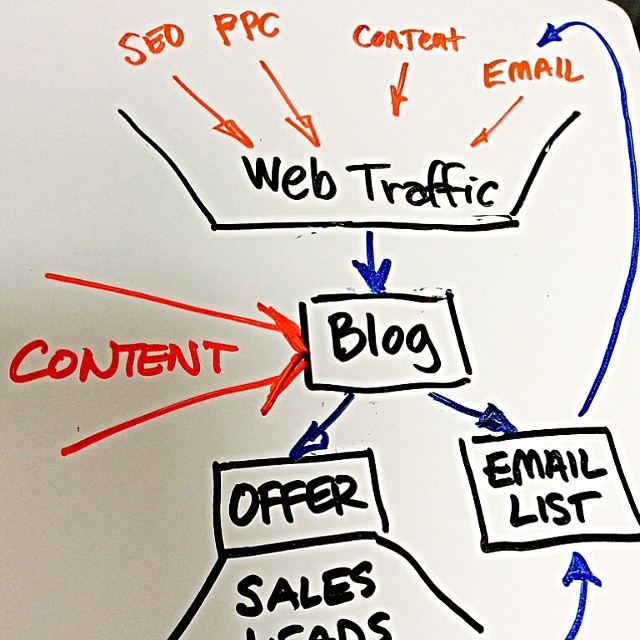 A new digital marketing program helped one firm reinvent itself after traditional methods proved ineffective.
A prominent marketing firm was experiencing an all-too-familiar predicament: They had a great product that, for some reason, was not selling. They had been following their traditional marketing regimen; however, something about the purchasing landscape seemed to have shifted, and in a way that rendered their methods ineffective.
Then, a new content marketing program changed everything in just a few months. For the better.
The firm’s business was real estate marketing, and their great product, a community of new homes in a highly desirable location. Real estate, like so many other sectors, has experienced a major shift in buyer behavior in just the last two decades, with the majority of research being conducted online. The firm realized that a digital marketing strategy, unlike traditional print ads, could better reach a wider audience of potential homebuyers.
In less than 90 days after implementing the new content marketing program, sales increased by nearly 40%. Within the year, social reach grew by 325%, web traffic by 250%, and sales by 300%.
Download this case study to learn how the firm achieved such remarkable results.

Related articles:

by Fronetics | Feb 24, 2016 | Blog, Content Marketing, Marketing, Strategy
Putting together digital marketing pieces in a way that fully meets regulatory requirements can grow your business exponentially.
There is a misconception that companies within a regulated industry are denied the benefit of digital marketing. These businesses often hide behind their regulations, simply because it is easier than working with them to create new avenues into the digital realm of marketing and company branding.
Is your marketing antiquated and stuck in the past? Could you be using regulations as an excuse to avoid change and stepping into the digital age? Are you really restricted from having an effective social media presence?
The facts say that you are not.
Regulated industries, such as those in the financial management realm, can be creating a very personal connection and presence with their customers, and therefore developing a competitive advantage. But, they must be willing to take the initiative to change how things are accomplished, to re-organize, and to create a cooperative strategy within their organization. Your mission, should you choose to accept it, is to tackle content marketing in a manner that fully upholds your regulatory standards.
It not only can be done, but the companies who successfully adjust can grow their businesses exponentially. In fact, other companies within your industry are probably already proving this to be true. A recent study indicated that that 77% of respondents from companies across industries planned to increase their digital marketing budgets in the coming year.
So, how does a business in a regulated industry — with restrictions on things like publishing, advertising, and even how interviews can be conducted — overcome these challenges and become a content marketing machine? How do you deal with the fact that every piece of content must be reviewed by an attorney or an outside compliance agency? How do you promote your business when there are even restrictions on customer testimonials?
First, marketing in today’s digital environment will require an overhaul of your strategic planning (aka, how you do things, and perhaps how you have always done things) and the release of any fear you have of digital marketing.
Creating an environment conducive to digital marketing
Here are a few tips to support this change:
- You must create a management environment where the swift development of rich content can thrive. In regulated industries, this probably means you need fast and effective access to an attorney, who can read and approve new content for public consumption within a couple of hours.
- You need to create a smooth, reciprocal interaction across these departments, with a focus on a more efficient operation and mutual support of the approval process.
- You need to invest financially in a solid strategic plan for your digital marketing. It takes money to make money, so to speak. Consider teaming up with a firm of talented individuals from outside your industry, who specialize in how to create digital content customized to your target demographic. This team should have the capability to analyze content performance metrics and to guide your digital presence to achieve optimal results. Their services should provide you a customized content plan, increase your customer engagement level, and develop a digital presence for your company that meets regulation standards for your industry.
- Your content writers and management team needs to be well-versed on the latest data and statistics, as well as your overall marketing initiatives, so they can produce content based on the latest facts and figures that will attract new customers. Essentially, they need to know what your new customers want and have the data available that will garner their attention.
Once you have paved the way, your company can begin to benefit from the creation of a blog, eBooks, and other digital presentations.
So how do you make it happen? How do you begin to access these modern marketing techniques in a regulated industry?
- First, your leadership team must be on board, ready to embrace change and to learn to communicate in new ways. If this is not something you can see happening because mindsets are stuck in the 1990s (pre-social media age), then you should educate stakeholders on how social media can impact a business’s growth and success.
- Redevelop the marketing department and provide the resources necessary to stay compliant and obtain necessary legal approvals quickly and efficiently.
- Befriend the legal department. They should be part of your support team, not a challenge you must overcome. Remove old paradigms and replace them with creative solutions, like an interactive spreadsheet shared between marketing and compliance to speed up the social posting process. Make marketing and compliance part of the same team, one that works together to seek solutions, alternatives, and compromises.
- Give it time. This is a big step in the right direction to align long-term strategies to better reach a new set of consumers. But it does not happen overnight. Plant the digital marketing seeds today and reap a crop of new customers tomorrow.
If you are in a regulated industry, the time to embrace change and step into the realm of digital marketing is now. Those who learn to evolve, to think creatively to find solutions, and to face new demands as a team are the ones that will rise to the top of their industry and experience a competitive advantage that supports future success.
Related articles: