Did you know that 89% of B2B marketers consider customer testimonials and case studies to be the most effective kinds of content in converting buyers? A well-written case study engages prospects and generates leads. But what is an effective case study? And how do you create one?
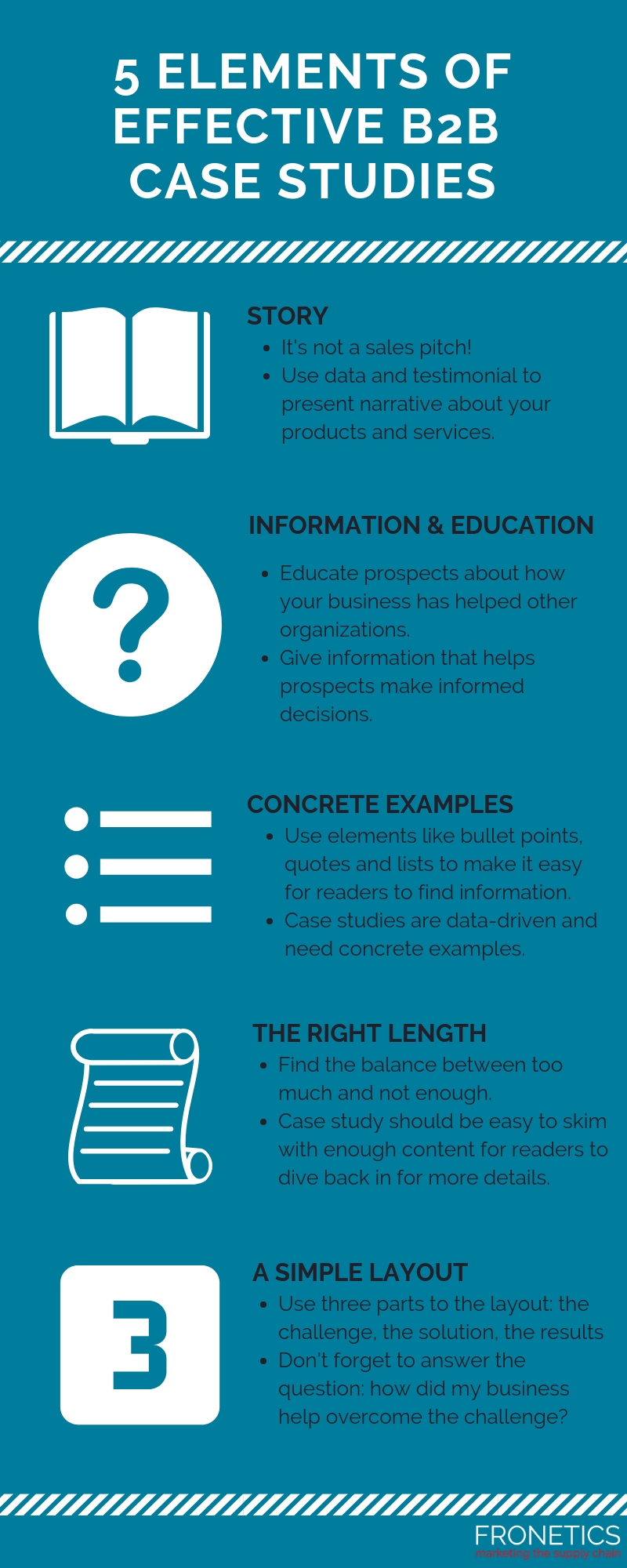
These five elements are the key to maximizing the effectiveness of your case study:
While it’s true that case studies are about the data, what makes them attractive to buyers is the story. This isn’t a sales pitch — it’s an opportunity to use data and testimonials to present a narrative to prospects about how your products and services helped another business.
Think of your case study as an opportunity to educate your prospects about how your business has helped organizations similar to their own. Again, this is not a sales pitch. In fact, case studies that are written as sales pitches tend to be ineffective. A case study gives your prospects information and educates them so they can make an informed decision about what’s best for their business.
Case studies are data-driven and offer concrete examples. This is one of the primary reasons they are a high-performing content type. An effective case study makes it easy for readers to find the information they’re looking for, using elements like bullet points, quotes, and lists to clearly and concisely convey key data.
There’s a delicate balance between presenting complete information, telling a story, and avoiding minutia that’s too specific to matter to your prospects. Ideally, you want your reader to be able to skim quickly and get an overall view, and then dive back in for more details. If your case study leaves your prospect with questions about how your products and services helped another business, chances are it doesn’t include enough information.
Case studies are your opportunity to use your successes to create a narrative, supported by key metrics, that demonstrates how your business successfully addressed the challenges faced by your customers. Telling a compelling story is one of the best ways to engage your prospects and convert leads.
Related posts:
A shipper used to Google "3PL in Atlanta" and click through ten websites. Now they…
The 10 questions to ask before hiring a supply chain marketing agency, plus red flags…
A step-by-step lead generation playbook for manufacturers: ICPs, buying committees, websites that convert, SEO, paid…
A practical SEO guide for 3PLs, freight brokers, and carriers: keywords, service and location pages,…
There's no shortage of supply chain content out there. The hard part is knowing which…
Editor's note: This post was originally published in June 2018 and has been updated for…